


Most people tap I agree without reading a single line of a privacy policy. That one tap can give an app permission to collect your location, contacts, browsing history, and more. Knowing how to recognise vague or incomplete privacy statements is one of the most practical things you can do to protect your personal data online.
India’s Digital Personal Data Protection Act 2023 DPDP Act now requires companies to take clear, informed consent before collecting your data. But the law cannot help you if you cannot spot when a privacy statement is trying to avoid giving you real information.
What Makes a Privacy Statement Vague?
A privacy statement is vague when it uses broad, unclear language that could mean almost anything. It hides what data is collected, why it is collected, and who it is shared with. A good privacy policy is plain and specific. A bad one is long, confusing, and full of phrases designed to give the company maximum freedom while telling you as little as possible.
Warning Signs to Watch For
1. We may collect information about you
The word may is one of the biggest warning signs. It does not tell you what is actually collected. A trustworthy privacy statement says clearly We collect your name, phone number, and device ID. If the policy uses words like may, might, could, or various types of information, that is a sign the company does not want to be pinned down.
Look for similar phrases like information you provide to us with no list of what that information includes.
2. We share data with trusted partners
This phrase appears in countless policies, but it tells you nothing useful. Who are these partners? A bank, an advertiser, a data broker? If the policy does not name the categories of third parties and does not explain why sharing is needed, you have no way to know where your data ends up.
Under the DPDP Act 2023, companies are required to disclose the purpose of data processing. If a policy skips this, it may not even meet the legal standard.
3. No mention of how long your data is kept
A complete privacy policy tells you the data retention period, meaning how long the company stores your information. Many Indian apps, especially smaller ones, simply skip this. If a policy says nothing about deleting your data after a certain period, your information could sit on their servers indefinitely, even after you delete the app.
4. Consent buried in long paragraphs
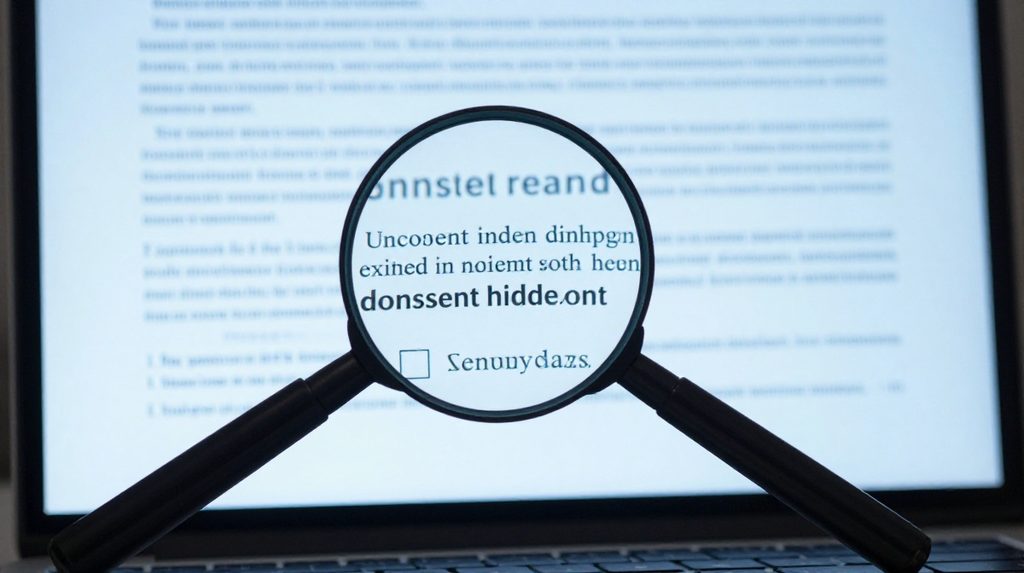
Some companies bury the actual consent clause deep inside a wall of legal text. They count on the fact that you will not read it. If the most important part of the policy what you are agreeing to is hard to find, that is not accidental. The DPDP Act requires consent to be given for a specific, clear purpose, and buried language does not meet that standard.
If you use platforms for online gaming or entertainment, such as lotus365 online, always check whether the privacy policy lists the specific types of data collected and gives you a clear opt-out path.
5. No information on your rights
You have rights over your personal data. You can request access, ask for corrections, and withdraw consent. If a privacy policy does not mention any of this, or uses language like we will try to accommodate reasonable requests, it is being deliberately evasive. A proper policy names the rights and tells you exactly how to exercise them.
6. Vague security language
Phrases like we take reasonable steps to protect your data or we use industry-standard measures say almost nothing. Reasonable according to whom? What measures specifically? Compare this to a clear statement like we use 256-bit AES encryption and two-factor authentication for all user accounts. The difference is obvious.
A Simple Check You Can Do in Two Minutes
You do not need to read a 4,000-word policy from start to finish. Use your browser’s search function Ctrl+F or Cmd+F and look for these words: third party, partner, retain, delete, consent, and rights. If most of these words are absent, or if they appear only in vague, passive sentences, treat that as a red flag.
A platform that is serious about privacy will make these things easy to find. If you are using a service like lotus365 india and cannot locate a privacy page at all, that itself is a strong warning sign.
What Indian Law Says About This
The DPDP Act 2023 changed the legal baseline for data privacy in India. Companies that collect personal data from Indian users must now:
- State the purpose of data collection clearly
- Get specific consent, not blanket permission
- Allow users to withdraw consent at any time
- Tell users how to raise grievances
If a privacy policy you are reading does not cover these four points, it may not meet the requirements set by the Ministry of Electronics and IT. You can check the official framework at meity.gov.in.
| What a Good Policy Has | What a Vague Policy Has |
|---|---|
| Clear list of data collected | Various types of information |
| Named third-party categories | Trusted partners |
| Specific retention period | No mention of data deletion |
| Explains your rights in plain words | No mention of user rights |
| Named contact for grievances | Generic contact us form only |
When to Walk Away

If you spot more than two of the warning signs above in a single policy, think carefully before sharing sensitive data. This is especially true for apps that ask for permissions beyond what they need, like a flashlight app asking for your contacts, or a recipe app requesting location access.
For financial apps, health apps, or any service that handles your Aadhaar number, bank details, or medical records, the standard must be higher. If the privacy policy is incomplete, do not proceed until you have checked reviews, looked for news about data leaks involving the service, or contacted their support for clarification.